Autonomous Ships 2022
31 March - 1 April 2022
National Maritime Museum, Greenwich, London*
*Hybrid Event - Join us in London or Online!

Introduction
The rapid technological development in the field of Maritime Autonomy is creating an opportunity for the marine industry as well as a challenge for the regulatory framework. In recent years we have seen surface to underwater vehicles being deployed for patrol, oceanographic and maintenance among other purposes. Furthermore, cargo ships projects involving coastal and ocean-going routes with different degrees of autonomy are being tested. Those will have great implications for shipping companies, shipbuilders and maritime systems providers.
In October 2021, the International Maritime Organization (IMO) approved an output to develop regulation for Maritime Autonomous Surface Ships (MASS) during 104th session of the Maritime Safety Committee (MSC).
Conference Topics
Listed below are just a few of the fantastic topics that are being covered in this conference:
- Regulating Autonomous Shipping
- Collision Avoidance
- Large and Small Ships
- Warship Technologies
- Navigation
- System reliability and maintenance
Keynote Speakers
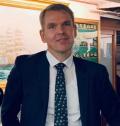
Dr Sascha Pristrom, Secretary to the IMO Maritime Safety Committee’s MASS Working Group
“Regulating autonomous ships – a goal-based approach”
Dr Sascha Pristrom is a master mariner with 10 years’ experience at sea on various types of ships, including tanker, container, conbulk, ro-ro and ro-pax ships. He joined IMO in 2007, initially in the Maritime Security Section of the Maritime Safety Division, later changed to Operational Safety (e-navigation, seafarer training and certification) and for the last 4 years in the Marine Technology and Cargoes Sub-Division.
He holds a PhD on onboard assessment of damage stability on board ro-pax ships and a PhD on maritime security, as well as a Master’s degree in International shipping. He has been involved in IMO’s work on SOLAS, the Polar Code, goal-based ship construction standards, maritime security (ISPS Code and related guidance, piracy), as well as e-navigation and STCW. In order to keep abreast with the latest developments in the industry he sailed on an ULCC (2018) and on a Canadian Coast Guard icebreaker in 2019.

Päivi Haikkola, One Sea - Autonomous Maritime Ecosystem
“Maritime automation terminology and state of industry”
Päivi Haikkola is heading One Sea – Autonomous Maritime Ecosystem. One Sea is an alliance of (currently) twelve companies and five organizations striving to create an autonomous maritime ecosystem by 2025. Päivi has a long history of working with marine related companies. She started her career in the nineties consulting and meeting hundreds of marine customers around the world. Since then she has worked with various strategic development projects in the pulp & paper and telecommunications industries apart from her many assignments in the marine industries. She has spoken at numerous conferences and seminars on various topics and has participated as a judge in international maritime awards panels.
Päivi has held several administrative positions in the past and worked both at shipyards and suppliers to the marine industry. Among other positions, she has previously worked as Head of R&D, Marketing Director and Administrative Manager, she has also acted as a Board Member. Päivi received a Master’s Degree in Economics (Business Administration) at Åbo Akademi University and a Master’s degree in Naval Architecture at Helsinki University of Technology.
Click here to view the abstracts
Click here to view the programme
Featuring
AIS will become a Maritime IoT network - Sternula will make it global with satellites
L Moltsen, Sternula ApS
Regulating Autonomous Shipping- A Case Study
B Soyer, Institute of International Shipping and Trade Law, Swansea University
Maritime Autonomy and Remote Operations - Development of Regulations
R Taylor, Maritime & Coastguard Agency
Towards autonomy - A view from the bridge
C Balls, Cayman Islands Ship Register
SWOT analysis of leading safety indicators for collision avoidance of Maritime Autonomous Surface Ships
J Nasur and K Wróbel, Gdynia Maritime University
Manning the unmanned ship: Is safe manning legislation a bottleneck in the development of autonomous ships?
S Eriksen, SIMAC
The Armada Fleet: Technical Update ahead of initial operations
D Hook, Ocean Infinity
Highly Autonomous Warship Technologies
J Rigby, BMT
A semi automated model for improving Naval Vessel System Reliability and Maintenance Data Management
A A, Daya and I Lazakis, Department of Naval Architecture Ocean and Marine Engineering, University of Strathclyde, Glasgow, UK.
Evolutionary Treaty Interpretation in the context of compliance of MASS operations with UNCLOS and SOLAS
M Sumer, IMO International Maritime Law Institute
Application of Risk Analysis Method with System Modeling to Remote Operation of Experimental Ship, Shinpo
M Shiokari, National Maritime Research Institute, National Institute of Maritime, Port and Aviation Technology
Where does the pilot go when the autonomous ship has no bridge? MASS Routing Service and smart Local Information Centres
T Porathe, NTNU, Norwegian University of Science and Technology
Acoustic-Based Machinery Condition Monitoring in Autonomous Ships
N Rajapaksha, Australian Maritime College, University of Tasmania
Autonomous Control in Shallow and Confined Water
T Van Zwijnsvoorde, Flanders Hydraulics Research
Registration
The registration is now closed.
Conference Venue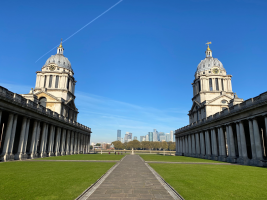
National Maritime Museum
Romney Rd
London
SE10 9NF
For more information on how to get to the venue, click here.
Sponsorship & Exhibitors
RINA events provide the perfect opportunity for effective and highly targeted marketing.
Sponsorship and exhibition opportunities exist for all of our conferences. For more information please follow the link or contact JP Media Services Tel: +44(0)1737 852 135 or e-mail: to discuss tailored options or availability.
 Continual Professional Development
Attendance at the RINA conferences and courses qualifies as Continuing Professional
Development. On completion of the course a CPD certififcate will be issued.