Wind Propulsion Conference 15-16 September 2021
Hybrid Event - Join us in London, Online or both!
Sponsored by:
In association with:

Introduction
The current use of alternative fuels and renewable energy sources within the shipping industry is still relatively scarce. Growing environmental legislation and concerns are driving the need to develop and apply innovative alternative power and propulsion technolog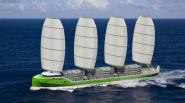 y for ships.
Now, industry players are increasingly putting a modern spin on one of the oldest concepts in shipping: harnessing the power of wind for ship propulsion.
Conference Topics
Market level assessment
- Future trends in the wind propulsion market effects of policy, regulation, price and the market barriers and drivers
- Developing world markets challenges, opportunities and designs for wind propulsion solutions
- How does wind propulsion perform in the small vessel market, fishing, ferry, workboats etc
- Lessons from the past how does the long history of wind propulsion solutions inform the systems and solutions of today and tomorrow
Concept level assessment
- Meeting the challenge of technical barriers to the deployment of wind propulsion rigs stability,
navigation, air draft etc.
- The use of weather routing software to maximise wind propulsion systems
- How to optimise a retrofit installation on existing vessels integrating retrofit wind into existing power
management systems
- Standardising fuel saving assessment for wind propulsion & wind technology performance assessment
- Wind propulsion and classification pathways to a standardised approach
- Zero emissions/Carbon Neutral pathways how does wind fit in and how can wind propulsion help
facilitate the adoption of other low carbon systems and fuels
- Assessment of the use of multiple different systems (e.g. sails and kites on the same vessel) and a series of the same rigs
- Wind propulsion & autonomous shipping
Technology level assessment
- How would maximising wind propulsion benefits impact the way we operate shipping and the ships
themselves
- The human element perceptions, experiences to date, training and safety
- Ports & logistics how compatible are wind vessels with the existing infrastructure. What systems are
being developed on board to mitigate this and what needs to happen in ports to adapt
- Big data + Big wind synergies, complementary approaches, impact and future developments
- Materials and manufacturing new developments/materials/systems for rigs and sails
- Assessment of the technology transfer from the competitive and leisure sailing world
>>Click here to view the abstracts<<
>>Click here to view the programme<<
Featuring
Accelerating the uptake of wind propulsion in shipping
Z Rafaelova, L Pomaska, V Kosmas and M Acciaro, Kühne Logistics University
Performance prediction and design of wind-assisted propulsion systems
F Tillig and J W Ringsberg, Chalmers University of Technology
Estimating the Cost of Retrofit for Shortsea Vessels
O Schinas, HHX.blue
A CFD Study on Wind Assisted Propulsion Technology for Commercial Shipping
W C P Hopes, D R Pearson and J E Buckingham, BMT Defence and Security UK Ltd
Development of a 1:30 scale sailing model of Oceanbird
A Hillenbrand, KTH Royal Institute of Technology
A Review of Wind-Assisted Ship Propulsion for Sustainable Commercial Shipping: Latest Developments and Future Stakes
L Khan, J J R Macklin, B C D Peck, O Morton, and J-B R G Souppez, Aston University
Methods of Retrofitting Wind Assist
A Johnson, Dasivedo Design Ltd
Experiences of Rotor Sail installations on various ship types and the emission reduction potential of Rotor Sails
J Kuuskoski, Norsepower
Sea keeping model testing of wind powered vessels
F Gerhardt, SSPA Sweden AB
Rondout Riverport 2040 A Post Carbon Gateway to the Hudson Valley and the World
A Willner, The Center for Post Carbon Logistics
Wind technologies in shipping to 2050: Factors and challenges for a sustainability transition
J Köhler, Fraunhofer ISI
Interactions between Two Flettner Rotors used for Wind Ship Assisted Propulsion
B Charrier, Consultant
Speed Trial Verification for a Wind Assisted Ship
S Werner, SSPA Sweden AB
Flettner rotors performances and interactions effects on the MARIN Hybrid Transition Coaster
M Garenaux, MARIN
Horses for courses: How to select the “right” wind propulsion system and how to make the business case
F Gerhardt, SSPA Sweden AB
Conference fees
Member £800+VAT=£960
Non-Member £900+VAT=£1080
Concession £350+VAT=£420
Authors £150+VAT=£180
The registratio has been closed.
Proceedings
2019 Proceedings are offered at 50% to delegates who register to the 2021 Wind Propulsion Conference
For further information please contact: publications@rina.org.uk
Conference Venue

The conference will be held at the Institution's Headquarters.
8-9 Northumberland Street, London, WC2N 5DA, UK.
Delegates may take advantage of the Institution's membership to stay at Club Quarters, less than one minute's walk from Headquarters
Click for details of Headquarters and Club Quarters
Sponsorship & Exhibitors
Talk to us!
RINA provides digital sponsorship opportunities which allow you to showcase your company and target your message with our Webinar Events.
For pricing and customized proposals contact Aftab Perwaiz on +44 7767791180, or email
 Continual Professional Development
Attendance at the RINA conferences and courses qualifies as Continuing Professional
Development. On completion of the course a CPD certififcate will be issued.