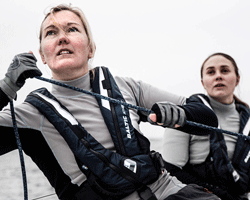
What goes into producing a high-quality lifejacket? Obviously, there is the proper selection of suitable, durable materials, components and foam, as well as testing to ensure that the jacket’s performance meets ISO, SOLAS and/or MED standards and helps to keep the wearer alive.
Another critical consideration, though, is customer feedback: the end user’s requirements and preferences play a part in determining the jacket's design, fabrics and features, and how effective it will be in an emergency. This feedback has been a determining factor in new product development for LSA manufacturer Baltic Lifejackets, Neil Harrison, head of business (commercial marine), tells Ship & Boat International.
“One example is the evolution of lifejackets for offshore wind farm personnel,” Harrison explains. “As workers are typically looking upwards and working with their arms above their heads during the day, we’ve ensured the jackets are as comfortable as possible for many hours of wear by widening the neck opening and modifying the shape of the back of the collar, to prevent it from digging into the back of the neck.
“We have also designed the positioning and the cut of the webbing straps in such a way as to allow the lifejacket to work in conjunction with a full fall arrest harness. This, combined with harness loops front and back, offers the wearer additional safety features.” Crotch straps can prevent the lifejacket from being unintentionally removed, or from slipping off should the wearer fall from the turbine into the water, and the lifejacket’s built-in lifting strops aid with man overboard (MOB) recovery.
Harrison estimates that about 80% of Baltic Lifejackets’ business is concentrated in the leisure boat sector, with the remaining 20% in commercial shipping – “but the commercial side is growing, with international sales exceeding domestic sales for the first time since Baltic Lifejackets was founded in 1977,” he adds. The company oversees facilities in Sweden, the UK, Hungary and Ukraine, which manage everything from fabric-sourcing to quality control, testing, design and manufacturing.
Baltic Lifejackets also recently introduced the Baltic Environmental Initiative range, using 100% recycled materials where the standards allow. “The materials are carefully selected, without compromising our quality and safety,” Harrison says. “The polyester fabric is made from recycled PET bottles and the floating material in our foam filled jackets is polyethylene, recycled from industrial waste.” As a side consequence, this eco-friendly approach generates 24% less CO2 throughout the manufacturing process. The company now aspires to have 50% of its range within this initiative by 2025.
One attractive commercial area is the rapidly growing aquaculture sector, currently undergoing a boom as fish farmers look to meet escalating global demand for protein in a sustainable manner. Designing suitable lifejackets for fish farm workers comes with its own set of considerations, Harrison explains. “The lifejackets need to withstand the daily routines of fish farm workers and everything they may come into contact with, to protect the lifejacket’s integrity,” he says. “These lifejackets will also require a complete review of the ergonomics and positioning of features as part of the design process. The lifejackets need pockets for tools and need to be compatible to work in conjunction with foul weather and/or protective clothing.”
To this end, Harrison has been working alongside the UK-based Health & Safety Executive (HSE) and the Aquaculture Safety Group, a voluntary initiative supported by partners including the Scottish Salmon Company, Cooke Aquaculture and Scottish Sea Farms, among others, to keep abreast of the sector’s specific needs and the safety requirements that will inform the development of these fish farm-specific jackets.